Launch of a new educational project at the "Innovation Campus Sustainability"
March 12, 2026 – Over the next two years, the “Transdisciplinary and Transformative Sustainability Education” project of the Innovation Campus for Sustainability (ICN) will strengthen high-quality sustainability education in academic programs and teaching at universities in Baden-Württemberg. The Karlsruhe Transformation Center for Sustainability and Cultural Change (KAT) serves as co-project lead together with the Research Group for Transformative Sustainability at the University of Freiburg. In early March, the project team, representatives from teaching, higher education pedagogy, and administration at KIT and the University of Freiburg gathered for a joint kickoff event in Karlsruhe.

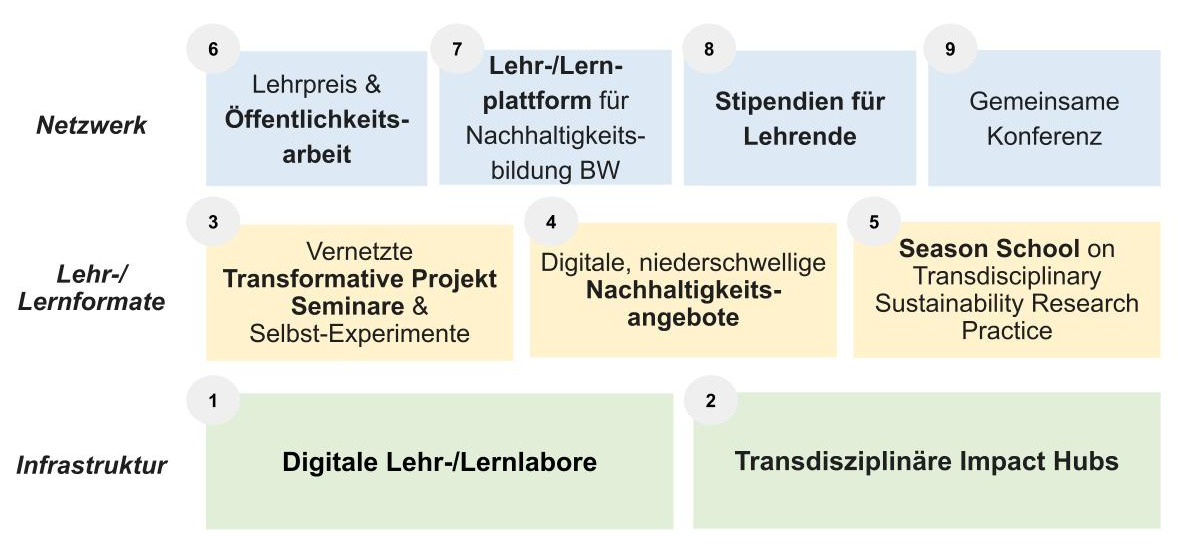
The project aims to enhance the quality of study and teaching at universities in Baden-Württemberg by strengthening transdisciplinary and transformative sustainability education. To this end, a total of nine initiatives – covering infrastructure, teaching formats, networking, and communication – will be designed and piloted over the next two years. The initiatives aim to foster students’ problem-solving skills and train them to become specialists and leaders capable of shaping the sustainability transition. They will be piloted at KIT, the University of Freiburg, and selected universities in Baden-Württemberg, and made available to universities across the state for use in teaching.
“Our target audience for the development of these initiatives is faculty members at universities throughout Baden-Württemberg. We are developing resources designed to motivate and empower them to design and implement transdisciplinary and transformative teaching on their own and with minimal effort in the future,” said co-project leader Susanne Gerstberger (KAT).
Interactive Kickoff Event to Launch the Project
In early March, around 40 people from Karlsruhe and Freiburg gathered for a kickoff event. KIT Vice President Prof. Dr. Kora Kristof delivered the opening remarks. In addition to presenting the project and the project team, the meeting focused in particular on an interactive exchange regarding the project goals and the planned measures.
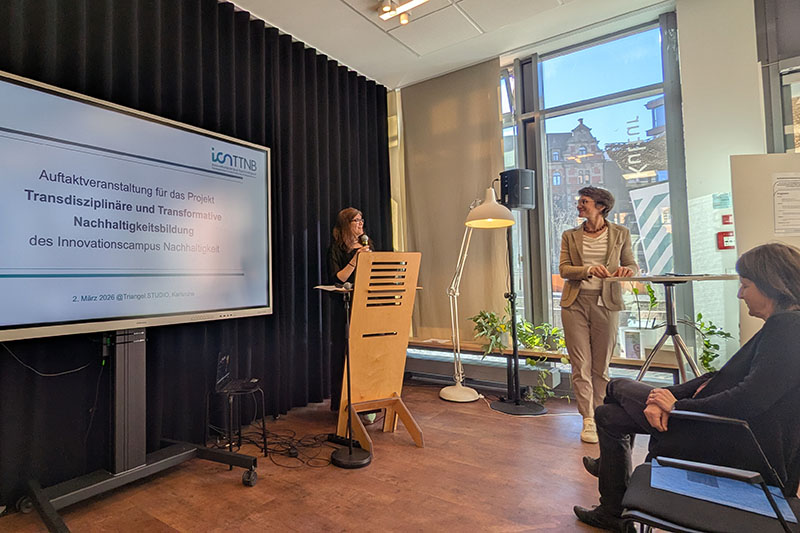
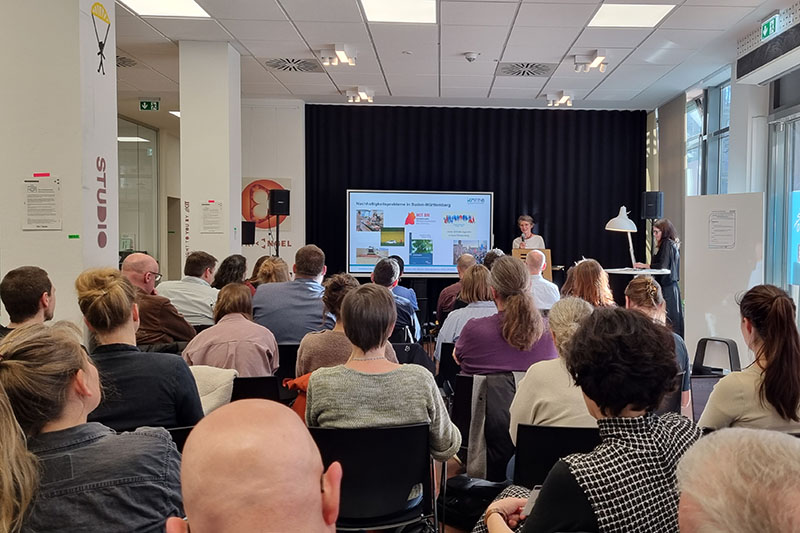
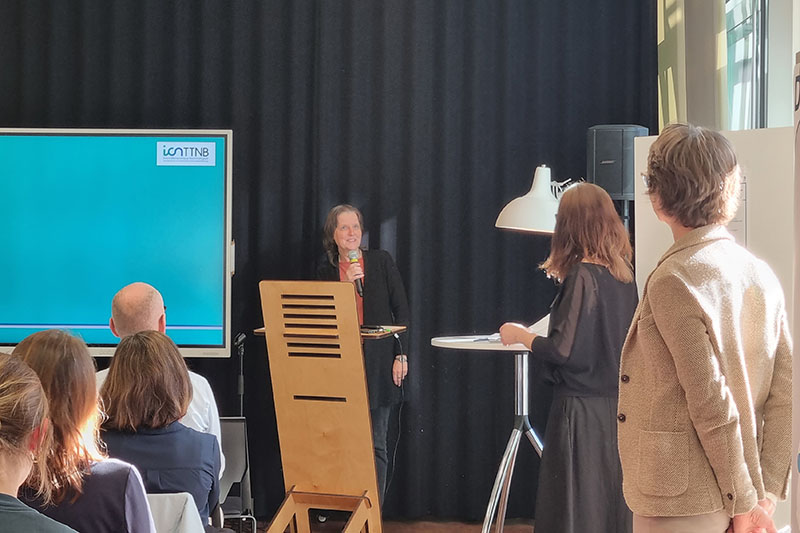
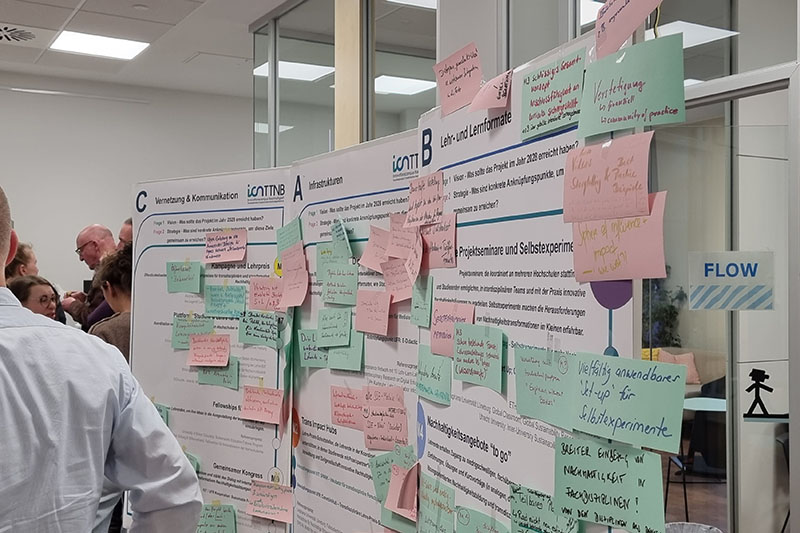
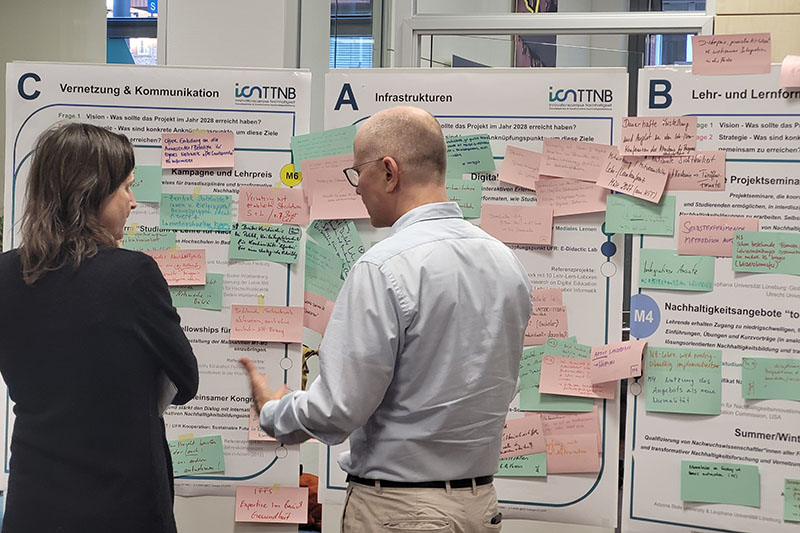

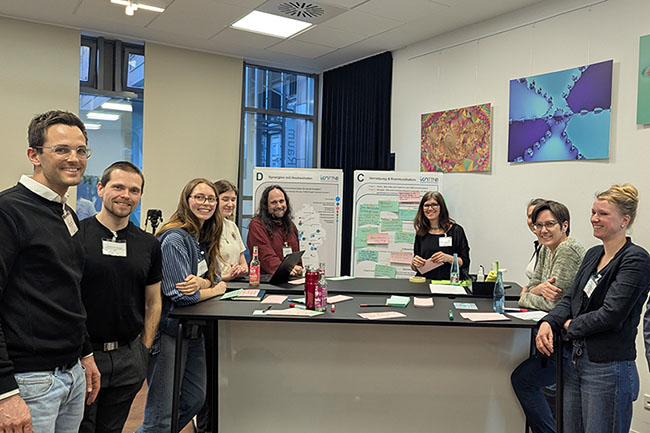
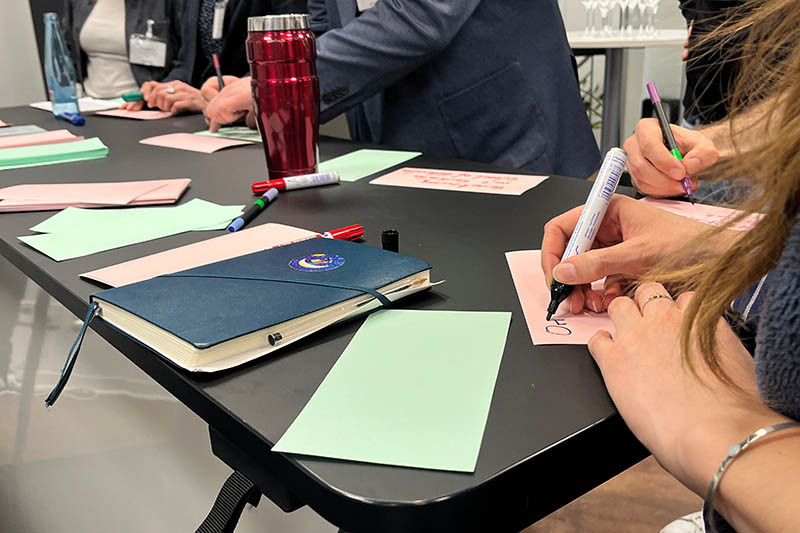
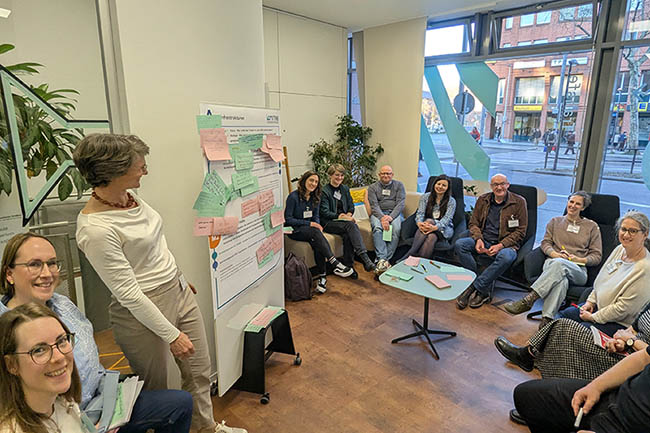
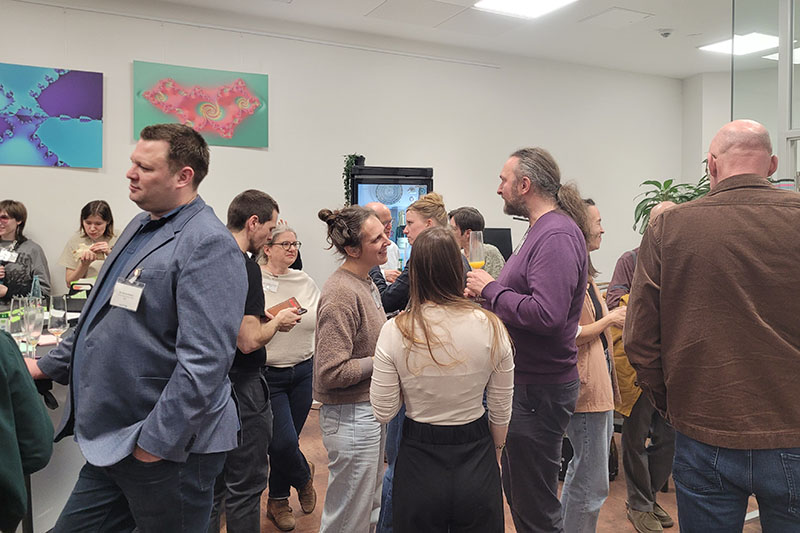
The nine measures – covering infrastructure, teaching formats, networking, and communication – were discussed at three thematic tables. In small groups, participants had the opportunity to contribute ideas and visions regarding the project’s design and implementation. The project team was also pleased to identify strategic points of connection within their own departments at KIT and the University of Freiburg, as the project’s long-term sustainability has been a key consideration from the very beginning.
“The participants provided us with valuable input. They showed us where the project connects to their areas of work and teaching. This helps us make good use of the interfaces between teaching and practice in sustainability education, as well as with initiatives at universities across the state,” said Katja Brundiers, co-director (UFR TNW).
The results of the kick-off event will be incorporated into the project.
Further information
- Like all projects of the “Innovation Campus Sustainability” (ICN), this project is also being carried out jointly by the Karlsruhe Institute of Technology (KIT) and the University of Freiburg. Dr. Susanne Gerstberger (KAT) from KIT is leading the project in cooperation with Dr. Katja Brundiers from the University of Freiburg. The dual leadership is supported by the ICN management and a core team consisting of members of the ICN Research Board, including Dr. Oliver Parodi, Head of KAT at KIT; Prof. Dr. Daniel Lang, KIT, Shaping Real-World Laboratory Research; and Prof. Dr. Arnim Wiek, University of Freiburg, Humboldt Professorship for Sustainable Food Systems.
- The project is funded by the Ministry of Science, Research and Arts (MWK) with € 2.4 million from the federal-state program “Future Contract". The funding period runs from October 2025 to February 2028.
- More information is available on the Innovation Campus Sustainability (ICN) website and on the ICN project page.