The German energy system is undergoing change. Large power plants are being replaced by small local facilities, renewable energies and storage technologies are on the rise, and consumer behavior is also changing. Against this backdrop, technologies play an important role. However, they are only one building block when we think about the future.
Project duration: 2018-2022
We are happy to advise you:
The sustainable design of our energy system is above all a task for society as a whole. This requires participation. But who should be involved, when, and how? And which formats are suitable for which energy contexts and target groups? This is where the"Energy Transformation in Dialogue"project comes in.
The participation formats
Learning from each other and trying out new things
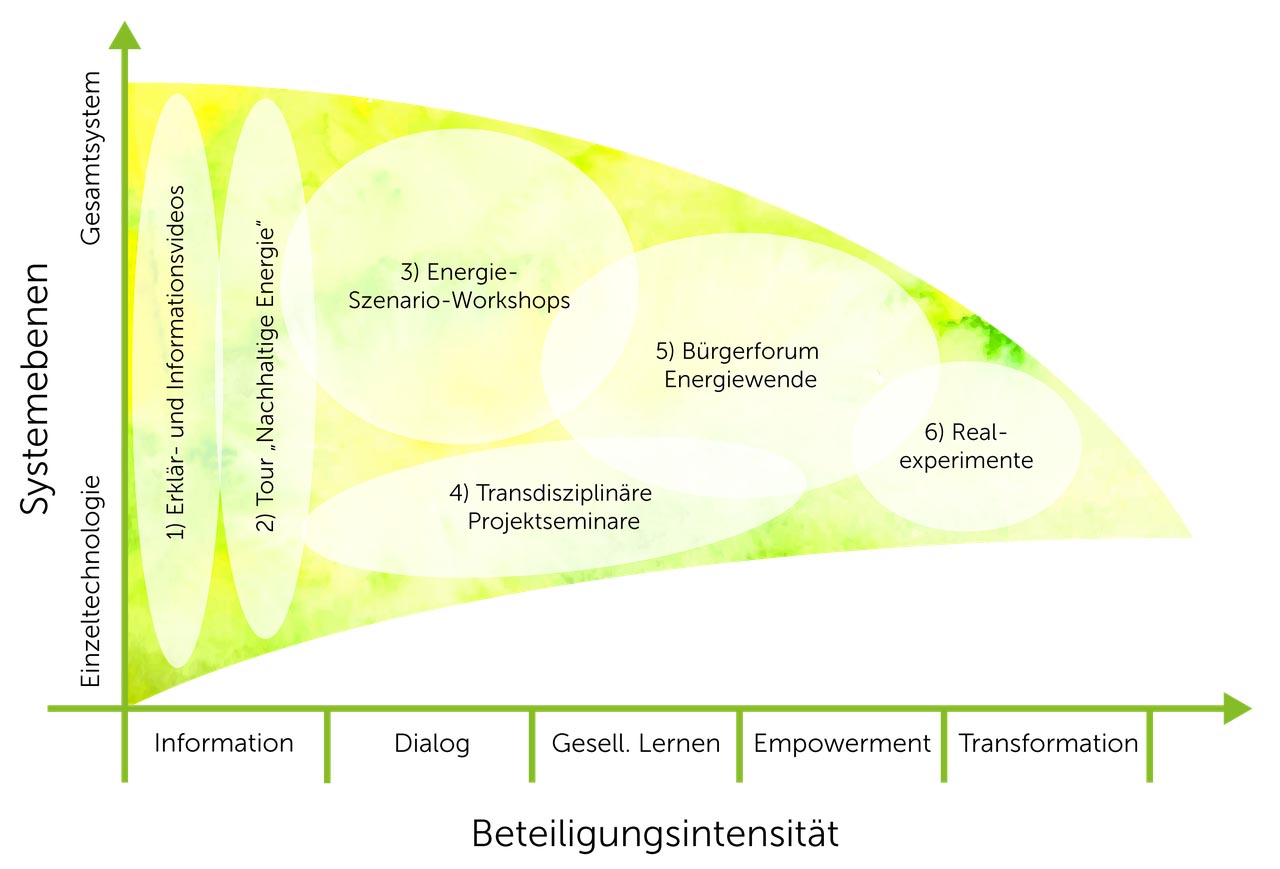
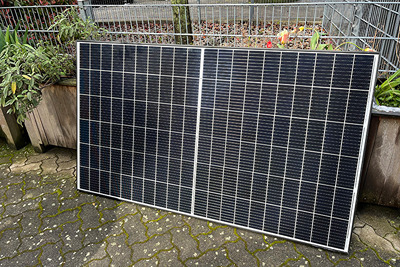
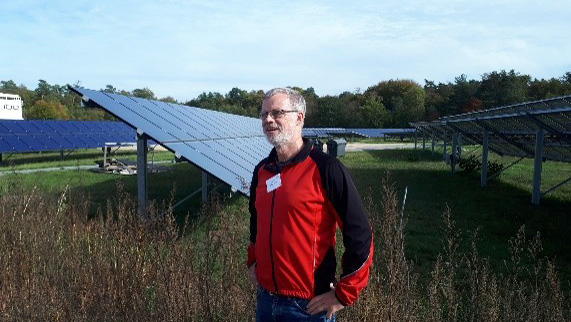
Whether it was "energy" tours through the city of Karlsruhe, scenario workshops with people from the administration, the energy industry, and civil society, or real-world experiments with balcony solar modules – our participation formats were diverse. This enabled us to encourage and empower citizens, local businesses, students, and researchers to discuss the transformation of the energy system, participate in an experiment themselves, and ultimately play an active role in shaping the energy system. During the funding period, the project carried out over 40 transfer and participation formats, with over 1,000 participants.
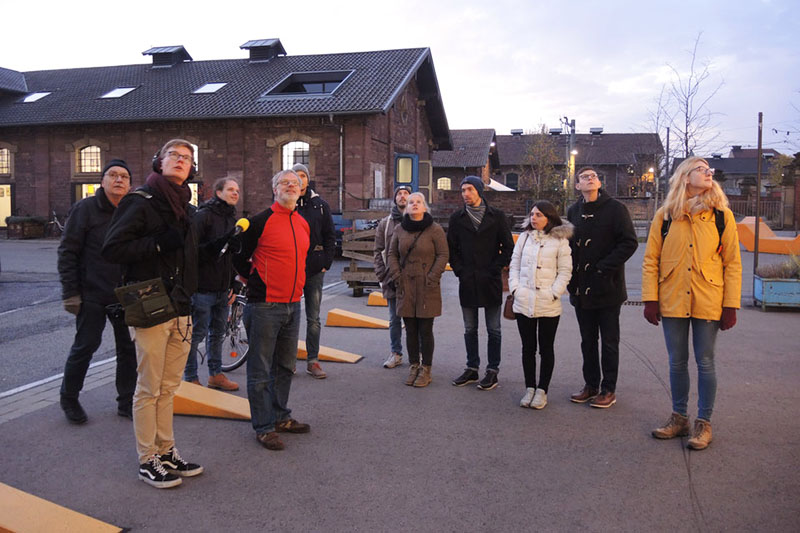
Sustainable Energy Transition Tour
With this format, we wanted to raise awareness of KIT research and urban energy systems and invite visitors to discuss these topics. During a total of 18 tours, participants learned about nearby city parks as natural air conditioning systems, were taken on a journey through time to Karlsruhe's city gas, and discovered how complex and exciting the heat transition can be.
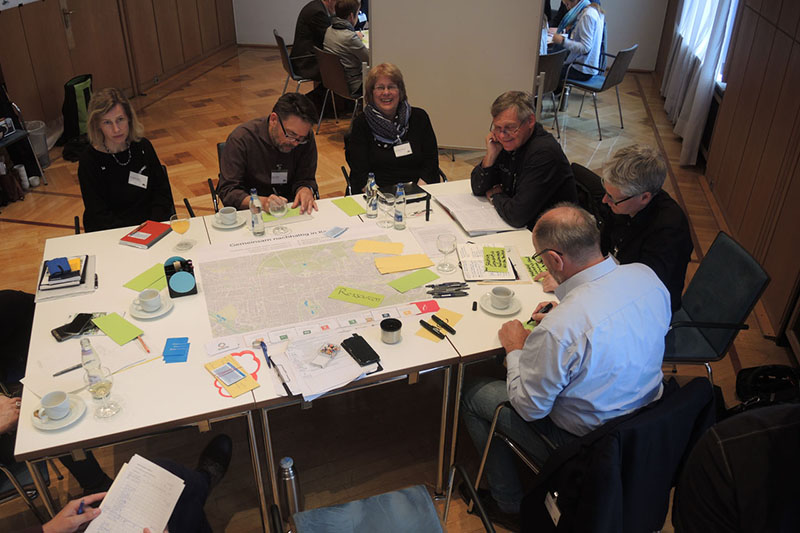
Energy scenario workshops
Various stakeholders discussed and evaluated the design of our energy system from a real-life perspective. We addressed a wide range of target groups, including public administration, citizens, and students. The ten workshops that were held also employed a variety of methods, such as the use of serious gaming approaches.
Transdisciplinary project seminars
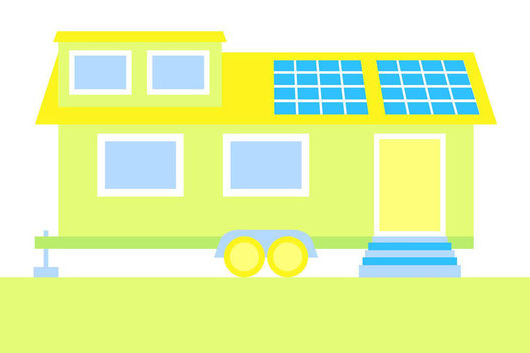
How can tiny houses be made more sustainable? How can solar energy be promoted in Karlsruhe? Students addressed these and similar questions in four project seminars. Together with municipal, commercial, and civil society partners, they worked on socially relevant and energy-related topics. This strengthened the exchange between KIT research and the Karlsruhe region.
Citizens' Forum on Energy Transition
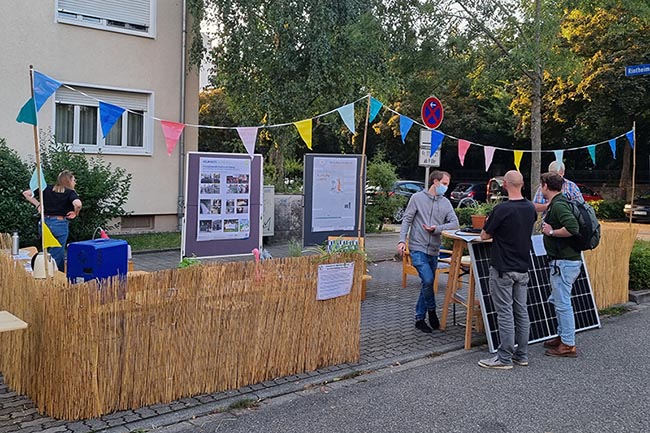
Research and society engage in dialogue – whether in creative spaces or parking lots in the middle of the city. The five events covered a wide range of topics: from the potential and obstacles of solar energy, to the desired and undesired use of artificial intelligence in the energy sector, to the future design of our entire energy system.
Real-world experiment "Your Balcony Network"
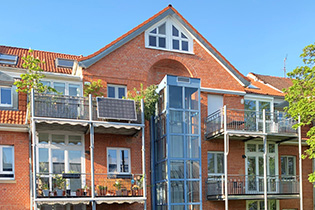
As part of the real-world experiment, 22 participants from Karlsruhe were given the opportunity to try out solar energy for themselves at home with so-called balcony solar systems. Not only was climate-friendly electricity generated, but the question of what changes were set in motion among the participants was also explored.
Selected videos and podcast episodes
Videos:
- Visit of the Ökochecker, SWR Marktcheck (from approx. minute 11:10)
- Impressions from KIT Science Week and the 2021 Citizen Dialogue
- Your Balcony Network: Energy creates community
- Portrait: Sustainability researcher Marius Albiez
- Society and #EnergyTransition | "ITAS kompakt"
- Why the heat transition is important
- Technik.kontrovers: Clean and affordable energy – for everyone?
- More Than A Fiction – Your Energy Future 2030
- Balcony module – solar energy at home
Podcast:
↵
Selected literature
Chapter 9 Energy Transition – More Than Solar Plants and Grids
2025. The Future of Cities and Energies in Western Europe – Scales, Actors and Social Experiments. 2025. Ed.: P. Hamman, 227–254, De Gruyter. doi:10.1515/9783111378992-013
Reallabor versus Realexperiment: Was macht den Unterschied?
2024. GAIA - Ecological Perspectives for Science and Society, 33 (2), 216–221. doi:10.14512/gaia.33.2.4
Empowering citizens for the energy transition: facilitating role change through real-world experiments
2024. Sustainability Science, 19 (3), 715–737. doi:10.1007/s11625-023-01453-7
Diversifying power in action: A socio-psychological approach to inclusive energy transition experiments
2023. Energy Research and Social Science, 100, Art.-Nr.: 103070. doi:10.1016/j.erss.2023.103070
Energiewende nah an Mensch und Alltag
2022. Energiewirtschaftliche Tagesfragen, (6), 31–33
Further information
"Energy Transformation in Dialogue" was a project at the Karlsruhe Transformation Center for Sustainability and Cultural Change (KAT) atITAS/KIT.
Funded by: Helmholtz Association of German Research Centers